
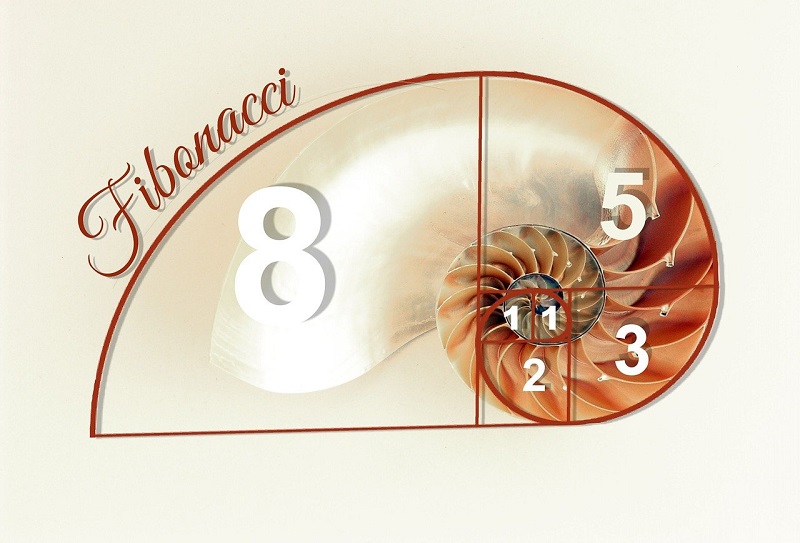
Fibonacci Sequence
✓ Trusted sources ✓ How do we evaluate?
This content contains affiliate links — if you sign up through them, we may earn a commission. This does not affect our reviews. How we make money
One of the betting strategies in gambling is the so-called Fibonacci sequence (Fibonacci system), named after the medieval Italian mathematician Leonardo Fibonacci. The system involves progressive bet increases, also used in the Martingale system. However, it is much gentler on the bettor’s bankroll. Still, it is not a guaranteed profit method, and progressive bet increases should be avoided.
Fibonacci sequence numbers
In mathematics, the Fibonacci sequence is an infinite sequence of consecutive numbers where each subsequent number is the sum of the two preceding numbers. The Fibonacci sequence starts with 0:
- Fibonacci sequence: 0, 1, 1, 2, 3, 5, 8, 13, 21, 34, 55, 89, 144, 233, 377, 610, 987, 1,597, 2,584,…
Fibonacci first used his sequence to describe the growth of a rabbit population under idealized conditions where the rabbits do not die, do not suffer from diseases, etc. The principle of the Fibonacci sequence is especially known to roulette players and is also applicable to sports betting. We can observe the laws of the Fibonacci sequence in nature as well.
The Fibonacci sequence in nature
Fibonacci numbers interest not only mathematicians and gamblers. They also fascinate naturalists because the sequence appears in both the animal and plant kingdoms. It can be found, for example, in many higher plants in the ratio of leaf sizes or the angle at which they grow from the stem. We also encounter it in sunflowers, where the arrangement of seeds into spirals follows two consecutive numbers of the sequence. The Fibonacci sequence can also explain the composition of bee colonies by sex.
Using the Fibonacci sequence in betting
For betting purposes, we omit the initial 0 and start betting from 1. For the number 1, we can imagine one unit, which we can assign a value of, for example, €5. Now we will show you how to proceed when using the Fibonacci sequence. Ideally, each bet is calculated with odds of 2.00. Every time your tip loses, you continue in the betting sequence, i.e., in the first round, you bet €5, in the second round €5, in the third round €10, in the fourth round €15, etc. Once you win, you cross off the last two numbers in the sequence and continue betting until the sequence is “cleared”. Once you manage this, you are in profit and can start a new round.
| Round | Bet | Result | Fibonacci sequence | Balance |
| 1. | €5 | ❌ | 1 | – €5 |
| 2. | €5 | ❌ | 1, 1 | – €10 |
| 3. | €10 | ❌ | 1, 1, 2 | – €20 |
| 4. | €15 | ❌ | 1, 1, 2, 3 | – €35 |
| 5. | €20 | ✅ | 1, 1, 2, 3, 5 | – €10 |
| 6. | €10 | ✅ | 1, 1, 2, |
€0 |
| 7. | €5 | ✅ | 1, |
+ €5 |
Comparison of the Fibonacci sequence and the Martingale
At first glance, it is clear that the Fibonacci sequence is much gentler on your bankroll than the Martingale system. Let’s demonstrate this with a specific example of nine unsuccessful bets in a row.
- Martingale:
- Round 1 you bet €5 and lose
- Round 2 you bet €10 and lose
- Round 3 you bet €20 and lose
- Round 4 you bet €40 and lose
- Round 5 you bet €80 and lose
- Round 6 you bet €160 and lose
- Round 7 you bet €320 and lose
- Round 8 you bet €510 and lose
- Round 9 you bet €1,025 and lose
- Before Round 10, you will face the decision of whether to place a bet of €2,050 to win €5 and knowing that you have already lost €2,045 so far.
- Fibonacci sequence:
- Round 1 you bet €5 and lose
- Round 2 you bet €5 and lose
- Round 3 you bet €10 and lose
- Round 4 you bet €15 and lose
- Round 5 you bet €20 and lose
- Round 6 you bet €30 and lose
- Round 7 you bet €50 and lose
- Round 8 you bet €85 and lose
- Round 9 you bet €135 and lose
- Before Round 10, you will face the decision of whether to place a bet of €220 knowing that you have already lost €355 so far.
The difference in amounts is significant. However, the problem with the Fibonacci sequence, as with the Martingale, is that you never know how long your losing streak will be. Additionally, you are never sure that the bookmaker will accept your next bet at the required stake. Although the Fibonacci sequence is less treacherous for sports betting than the Martingale, it is still very risky. It is better to avoid this tactic. If you do decide to put the theory into practice, at least try to bet on odds with a positive expected value (value betting).
Best bookmakers
Frequently asked questions
1️⃣ Who is the Fibonacci sequence named after?
After the medieval Italian mathematician Leonardo Fibonacci, who lived in the 12th and 13th centuries. Besides his sequence, Fibonacci also significantly contributed to the spread of Arabic numerals in Europe.
2️⃣ Which strategy, Fibonacci sequence or Martingale, is better?
The Fibonacci sequence is undoubtedly gentler on the bettor’s bankroll. However, even it cannot protect you from a bad streak of bets in the long run, which could lead to bankruptcy.