How long do crypto deposits and withdrawals take?
Most cryptocurrency transactions are fast, especially compared to standard fiat transfers. It’s usually a matter of minutes, but it depends on the chain, current network load, fees paid, and how quickly a given brand processes incoming payments. Some systems credit the deposit immediately after the required number of confirmations, others may have a short delay due to internal checks. Withdrawals are often slower than deposits due to account checks, KYC, and manual approval.
The indicative times below assume normal network load. Crediting to your gaming account can take longer if the platform uses internal checks or a higher number of confirmations.
*Approximate time: the time a chain typically takes to confirm a transaction.
Now that you know what a currency and a chain are and how long confirmation takes, let’s walk through the deposit process from selecting a currency to crediting.
How crypto deposits work step by step
Although the process may seem complex, the opposite is true. You choose a currency and chain, enter the amount, copy the address (or scan the QR code), and send the payment from your wallet or exchange. After the required number of confirmations, the deposit is credited.
1) Choose a currency and chain
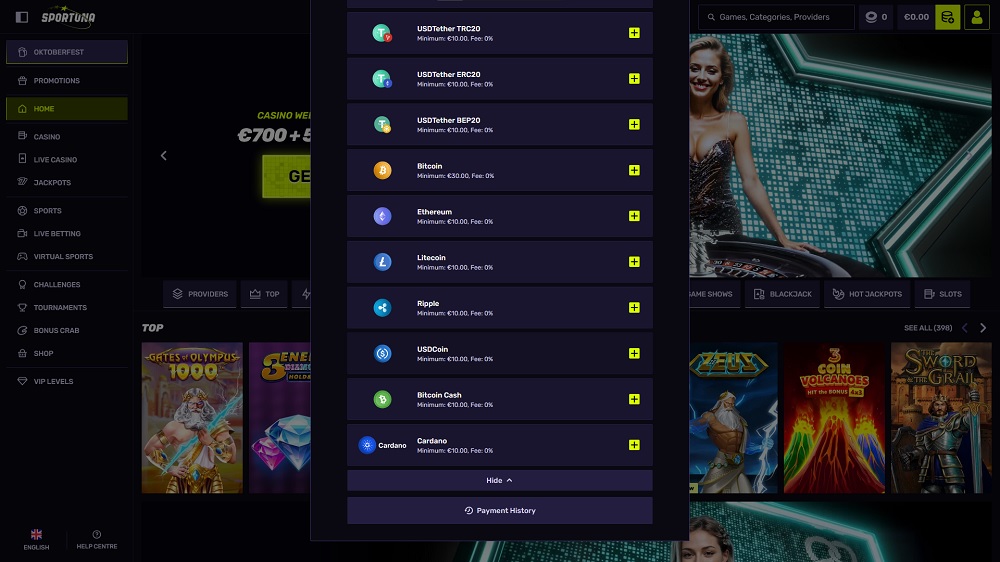
- In the Deposits/Withdrawals section, choose the desired currency (e.g., USDT, BTC, or ETH). Some currencies will also display chain icons (e.g., TRC20 / ERC20 / BEP20 for USDT). Select exactly the chain where you hold the funds to deposit.
- Tip: USDT on TRC20 ≠ USDT on ERC20. It’s the same currency but a different „payment route“.
2) Enter the deposit amount
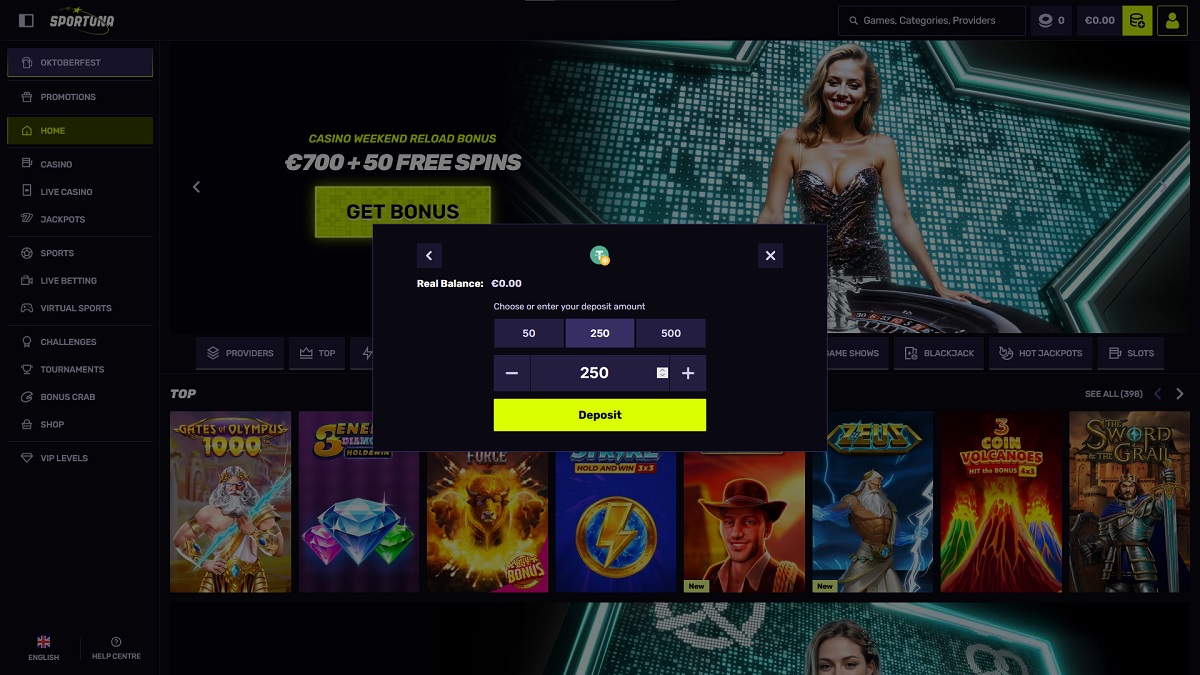
- Set the amount (preset values or your own).
3) The address is displayed
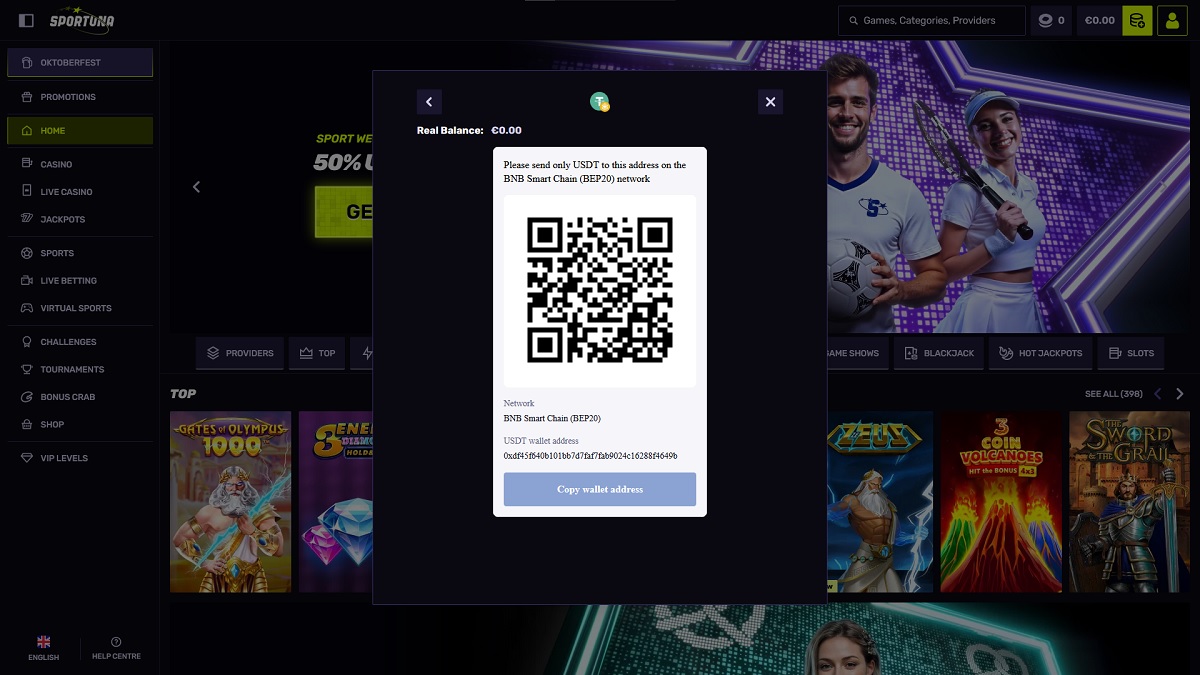
- The platform shows you the deposit address and selected chain; often also a QR code (convenient if your wallet is on mobile).
- The address is unique to the given chain (e.g., 0x… on ERC20, T… on TRC20, bc1… on BTC).
- Always copy the address—do not retype it manually.
- Some systems generate one-time addresses with a time limit. If it expires, generate a new one.
4) Send from your wallet/exchange
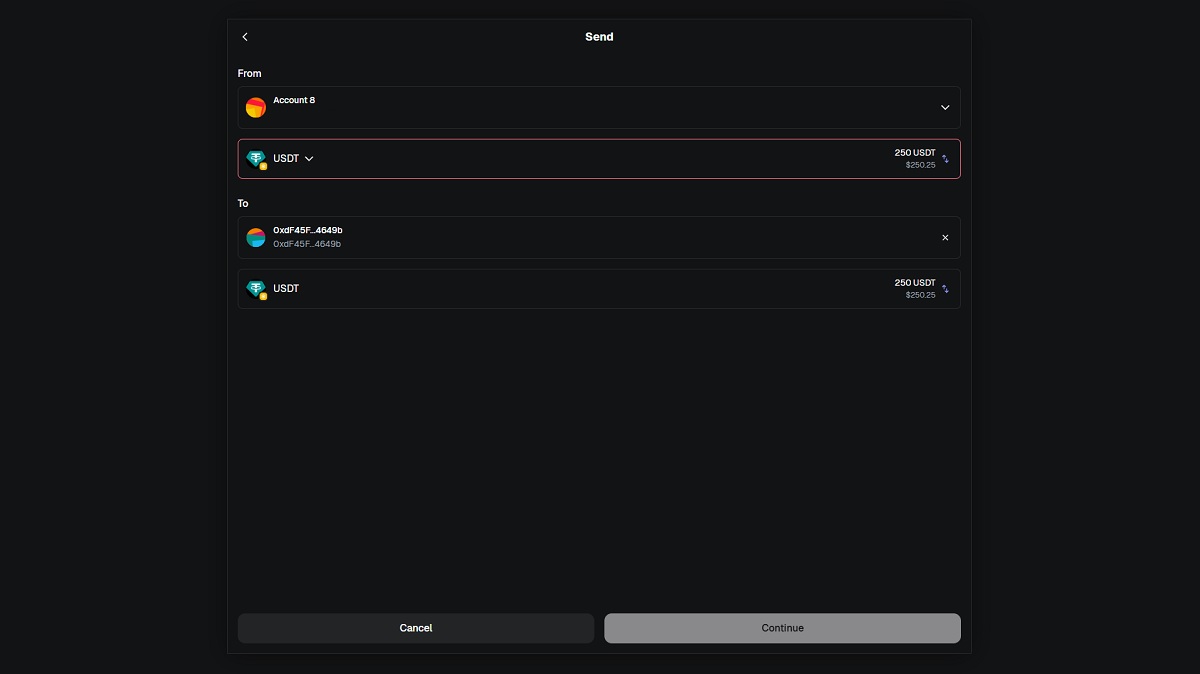
- In your wallet/exchange, select the same chain, paste the address, add a memo/tag if needed (see below), and send. We recommend starting with a small test transaction and only then sending the rest.
5) Chain confirmation and crediting
- The chain verifies the transaction (see the table in the previous section). After the required number of confirmations, the platform’s system credits it. Some brands perform internal checks, so crediting may take a little longer.
6) Special cases: memo/tag (XRP, etc.)
- For Ripple (XRP) and Stellar (XLM), a destination tag / memo is mandatory. It assigns the payment to your account because multiple users share one address.
- Missing or incorrect tag = payment not credited (must be resolved with support; not always reversible).
- Some exchanges may also require a tag/memo for BNB deposits.
7) Quick pre-send check
- Currency and chain: must match what the platform requires (e.g., USDT-TRC20).
- Address: paste by copying (check first/last characters).
- Tag/memo: fill it in if required for the currency (XRP/XLM).
- Test transaction: send a small amount first, then the rest.
- Explorer: after sending, check the transaction status via the TX ID (crediting may only appear after the set number of confirmations).
Where you can use crypto
Today, most gaming platforms offer a wide selection of cryptocurrencies for deposits and withdrawals. At the best casinos and sportsbooks, it’s practically standard. Brands with a rich choice of cryptocurrencies include platforms like Rabona, LibraBet, and Sportuna. Some casinos are even crypto-only and do not offer traditional fiat methods at all. The availability of specific currencies and chains varies by platform, so always follow the cashier instructions on the given site.
In practice, you’ll encounter several mainstays. The overview below helps you quickly check which currencies and chains are most common across gaming sites.
Supported currencies and chains
Below are the currencies and chains you’ll most often see offered at casinos and sportsbooks. The actual list may vary by brand.
Security and cryptocurrencies
Crypto payments are fast but require precision. Follow a few simple rules to avoid most mistakes.
Wallet vs. exchange (where to store funds)
- Smaller balances / quick deposits: keeping them on an exchange is fine for convenience.
- Larger balances / long-term holding: belong in self-custody (your own wallet with a seed), ideally a hardware wallet.
Sending payments (most common mistakes)
- The currency and chain must match (USDT-TRC20 ≠ USDT-ERC20).
- For XRP/XLM, fill in the destination tag/memo—without it, the deposit won’t be assigned.
- Copy the address; don’t type it manually. Check the first/last characters.
- Start with a small test amount, then send the rest.
- Verify the transaction status in a block explorer using the TX ID.
Account protection and sign-in
- Enable 2FA (preferably app-based, not SMS).
- Use strong, unique passwords and a password manager.
- If the service offers an anti-phishing code or a withdrawal address whitelist, enable them.
- Seed and backups (self-custody)
- Never share or photograph your seed; keep an offline backup in a safe place.
- Consider a hardware wallet for long-term storage.
Phishing and fake support
- Download wallets only from official sources; bookmark website addresses.
- Support will never ask for your seed/private keys.
Device and connection
- Keep your OS and apps updated; avoid public Wi-Fi when sending payments.
- Scan QR codes only from a trusted interface (the platform’s cashier).
Mini-checklist before sending
- Do currency + chain match?
- Is the address pasted correctly?
- Do I need a tag/memo (XRP/XLM)?
- Am I sending a small test amount first?
- Did the test amount arrive where it should?
- Is 2FA enabled?
Fees for crypto payments
To send tokens on most chains, you also need a small amount of the chain’s native coin to pay the fee (e.g., USDT-ERC20 → you need ETH, USDT-TRC20 → you need TRX, USDT-BEP20 → you need BNB). Without it, the transaction won’t go through.
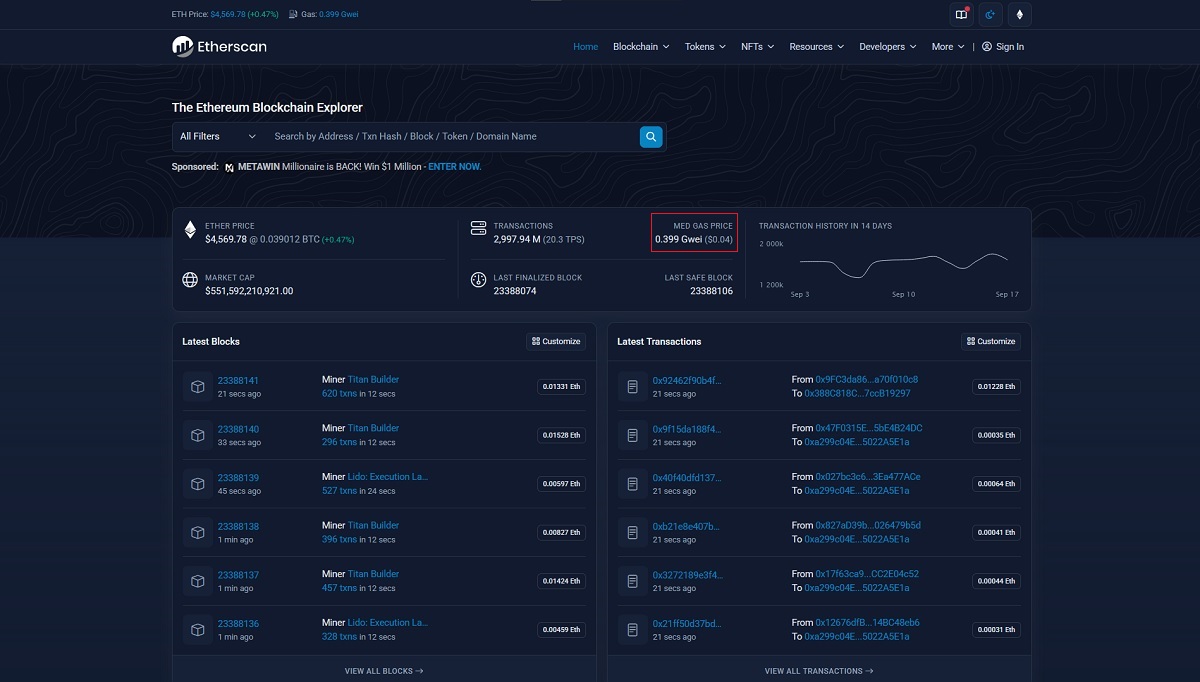
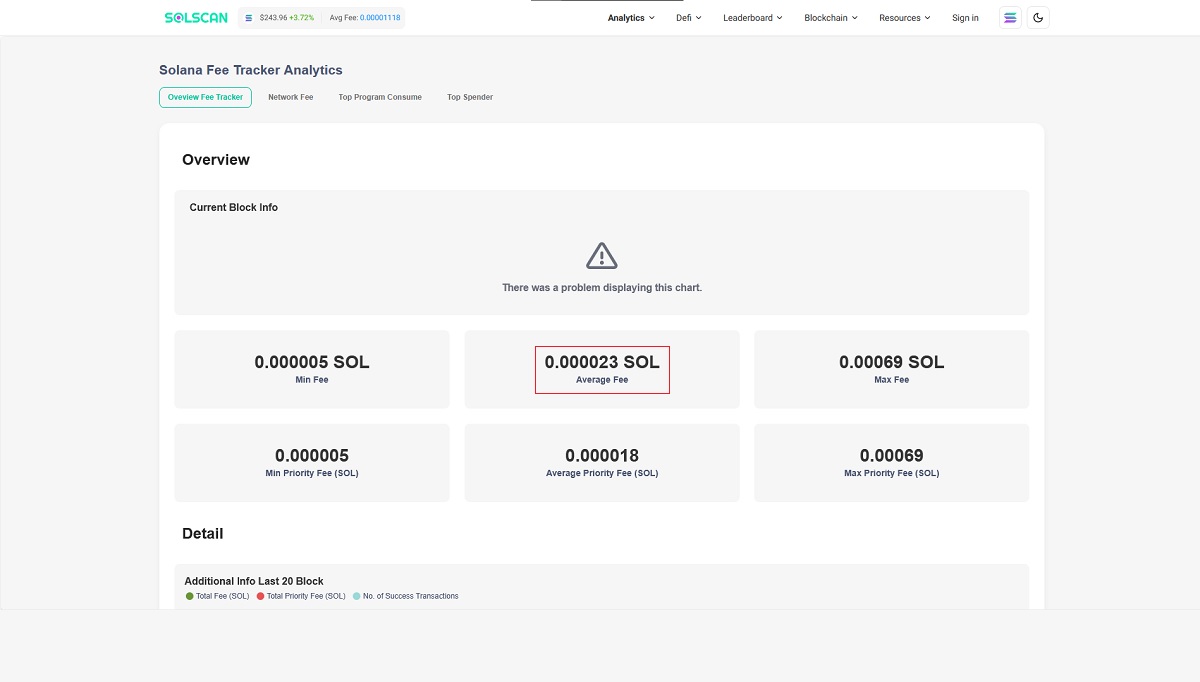
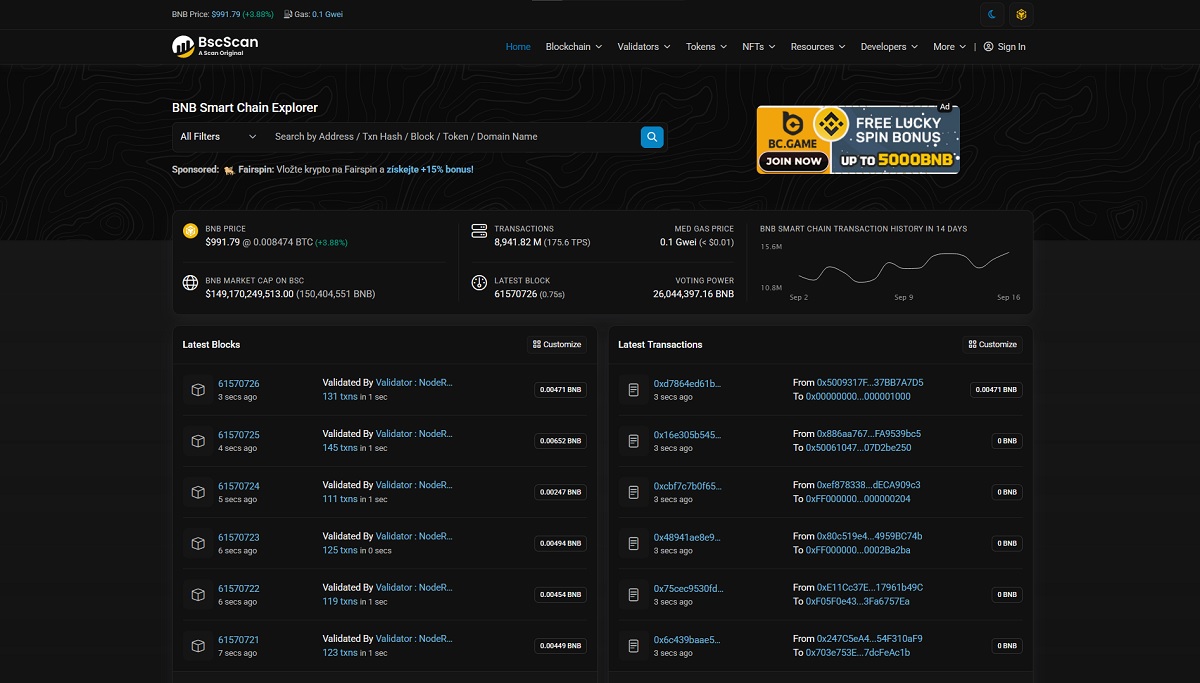
Blockchain fees fluctuate with network load. The table below lists indicative on-chain fees for a typical transfer on the respective chain (not exchange/casino deposit/withdrawal fees). A given platform may add its fixed fee or spread to the final amount.
Crypto deposit and withdrawal limits
Limits vary by brand for crypto and are most often tied to your account’s VIP level. In general, crypto limits tend to be higher than fiat, often even from the lowest level. You can always find specific values in the cashier or in our brand reviews.
How limits are typically set
- By VIP level: higher levels increase daily/weekly/monthly caps for deposits and especially withdrawals.
- By currency/chain: some brands have different minimums for USDT-TRC20 vs. USDT-ERC20, etc.
- By transaction direction: withdrawals usually have tighter limits than deposits and sometimes waiting periods (manual checks).
KYC and where you send from
- KYC is standard on gaming platforms.
- Also important is the KYC status on the exchange/on-ramp you send from/to: an unverified exchange account may have low withdrawal limits regardless of the casino’s limits.
Method matching on withdrawal
- Some brands require that withdrawals use the same method/currency as the deposit (AML rules). If you deposited USDT-TRC20, withdrawing USDT-TRC20 may be preferred.
What this means in practice
- Crypto often has higher caps (already at the base VIP level), but specific numbers differ across platforms.
- Check minimums and the chain directly in the cashier before sending.
- Expect checks on withdrawals.
- Check limits on the exchange you want to withdraw from/to.
Advantages
- Fast crediting
- Without „banking hours“ and weekends (24/7/365)
- Often lower costs than international transfers
- Stablecoins (USDT/USDC) hold value with USD
- Higher limits than fiat (already from base VIP level)
- Wide support across gaming platforms
- Transparent tracking via block explorer
- QR code = easy sending from mobile
- Choice of chain (speed/cost)
- Some brands offer special crypto bonuses
Disadvantages
- More complex for newcomers (currency × chain)
- Irreversible transactions (no chargebacks)
- Volatility with non-stable coins
- Different chain support across platforms
- Risk of phishing / fraudulent addresses
Rating
Among payment methods, cryptocurrencies stand out for speed, 24/7 availability, and often higher limits than fiat. The initial barrier is handling chains and address formats. You must always choose the correct currency × chain and add a tag/memo for some currencies. After a few transactions, the process becomes routine. A small test, checking the first/last part of the address, and tracking the transaction status in a block explorer all help.
Stablecoins (USDT/USDC) reduce volatility, and choosing the chain (e.g., TRC20/BEP20 vs. ERC20) lets you balance cost and speed. The actual crediting time also depends on the platform (number of confirmations, internal checks); withdrawals may carry fixed fees and review delays.
For storing balances, a self-custody wallet makes sense if properly secured (seed offline, hardware wallet); otherwise, an exchange is more convenient. The biggest risks come from entry errors, since a transaction sent to the wrong chain/address is usually irreversible. With a disciplined approach, it’s a reliable payment method alongside payment cards and e-wallets.
Alternatives
Cryptocurrencies aren’t for everyone. Some users dislike the learning curve (currency × chain, tag/memo), fluctuating fees, or the fact that the user bears all responsibility. If you want similar speed and convenience without dealing with chains, e-wallets or mobile wallets linked to a card make sense. When choosing an alternative, focus on crediting speed, deposit/withdrawal limits, fees, and bonus eligibility.
Skrill is a fast e-wallet with broad support across gaming platforms and convenient mobile management. You pay without sharing card details with the casino, and the deposit is done in moments. Downsides include possible fees and, crucially, the fact that most casinos and sportsbooks exclude Skrill deposits from bonus eligibility.
Neteller works very similarly to Skrill. Fast deposits, multiple currencies, simple controls, and good availability. For everyday amounts, it’s a convenient choice with far less complexity than crypto. As with Skrill, Neteller deposits are often excluded from many bonuses, so keep that in mind.
Apple Pay and Google Pay provide the easiest way to pay by card in a few taps without retyping details. Speed is very good, but compared to crypto it’s a highly centralized solution (you depend on the bank/card issuer and service provider), and limits/refunds follow banking rules. For small to medium amounts, they offer an excellent balance of speed and convenience.
Revolut combines a fintech account and card: quick top-ups, virtual cards, fair FX rates, and a quality mobile app. Compared to crypto, it’s again a centralized service under banking regulation. For everyday small/medium payments, it’s a very practical alternative without blockchain complexity.
Glossary
Frequently asked questions